
English Year 5

Categories: Bahasa Inggeris, Tahun 5
Wishlist Share

About Course

The English Year 5 syllabus is designed to help pupils develop confidence and competence in using English in their daily lives. It focuses on improving the four main language skills — listening, speaking, reading, and writing — through engaging topics and real-life contexts.

Throughout the year, pupils will learn new vocabulary, practise correct grammar, and use language in meaningful ways. Each unit introduces practical themes and communication situations, such as talking about places, daily routines, animals, food, and holidays. Grammar lessons are integrated naturally into the topics, helping pupils to use English accurately in both spoken and written forms.

The syllabus also encourages pupils to express themselves creatively, participate in conversations, write simple texts, and understand short reading passages. Cultural awareness, teamwork, and critical thinking are woven into activities to support holistic language learning.

Show More

Course Content

Unit 1: Towns and Cities
Short Notes Vocabulary – Places in a Town or City: park, library, school, hospital, supermarket, post office, museum, police station, restaurant, bus station, etc. Grammar – There is / There are: There is + singular noun → There is a library near my house. There are + plural noun → There are two parks in my town. Speaking & Writing – Talking about Places: Use phrases like: My town has a big park. There is a supermarket next to the post office. There are many restaurants in the city.

  • Soalan Objektif

Unit 2: Days
Short Notes 1. Daily Routines Daily routines are activities you do every day. Examples: get up, brush teeth, go to school, have lunch, do homework, go to bed. 2. Present Simple We use present simple tense to talk about daily habits and routines. Structure: ✅ I/You/We/They play football. ✅ He/She plays football. (Add –s for he/she/it) Adverbs of frequency: always, usually, often, sometimes, never. 3. Special Days Special days are days we celebrate (e.g. birthdays, festivals, national days). We use present simple to describe how we celebrate them. Example: We eat special food on Hari Raya.

Unit 3: Wild Life
Short Notes Topic: Animals & Superlative Adjectives Animals Vocabulary: lion 🦁, tiger 🐯, elephant 🐘, giraffe 🦒, dolphin 🐬, eagle 🦅, rabbit 🐇, crocodile 🐊, snake 🐍, kangaroo 🦘 Superlative Adjectives: used to show the highest degree. Examples: big → the biggest fast → the fastest tall → the tallest dangerous → the most dangerous Useful sentences: The elephant is the biggest land animal. The cheetah is the fastest animal on land. The eagle is the most powerful bird.

Unit 4: Learning World
Short Notes 1. School Subjects: Common subjects: English, Maths, Science, History, Geography, Art, Music, ICT. Example sentence: “I like Science because we do experiments.” 2. Present Continuous Tense: Used to talk about actions happening now / at the moment. Structure: Subject + am/is/are + verb-ing Examples: She is reading a book. They are studying English. 3. Studying a Language: Use language for classroom activities and communication. Phrases: “I am learning new words.” “We are speaking English in class.”

Unit 5: Food
Quick Notes Countable nouns: Things we can count (1 apple, 2 apples, a sandwich). Uncountable nouns: Things we can’t count individually (water, rice, sugar). Use a/an with singular countable nouns (a banana, an orange). Use some with plural or uncountable nouns (some apples, some milk). Use much for uncountable nouns and many for countable nouns. Eat more fruits, vegetables, and water for a healthy diet. Avoid too much sugar or junk food.

Unit 6: Sport
Quick Notes 1. Sports Vocabulary: football, basketball, tennis, badminton, swimming, running, cycling 2. Past Simple of “be” (was/were): I was at the stadium yesterday. They were happy after the match. 3. Past Simple of “do” and “have”: We did our training last week. She had a great game on Monday. 4. Talking About Games: “Did you play basketball yesterday?” “Yes, I did. It was fun!”

Unit 7: Growing Up
Short Notes 1. Describing People We use adjectives to describe people’s appearance and personality. Example: She is tall and friendly. He has short hair. 2. Object Pronouns Object pronouns replace the object in a sentence: me, you, him, her, it, us, them Example: I know him. She likes us. 3. Life Events Life events are important moments in someone’s life: be born, start school, make friends, move house, graduate, get a job Example: I started school when I was six.

Unit 8: Going Away
Short Notes Theme: Holidays and future plans Holiday plans: We use words and phrases to talk about where we are going, what we will do, and who we will go with. “Be going to”: We use am/is/are going to + base verb to talk about future plans. Example: We are going to visit the beach. Weather conditions: Useful vocabulary to describe weather: sunny, rainy, windy, cloudy, stormy, snowy. Example: It is going to be sunny tomorrow.

Earn a certificate

Add this certificate to your resume to demonstrate your skills & increase your chances of getting noticed.
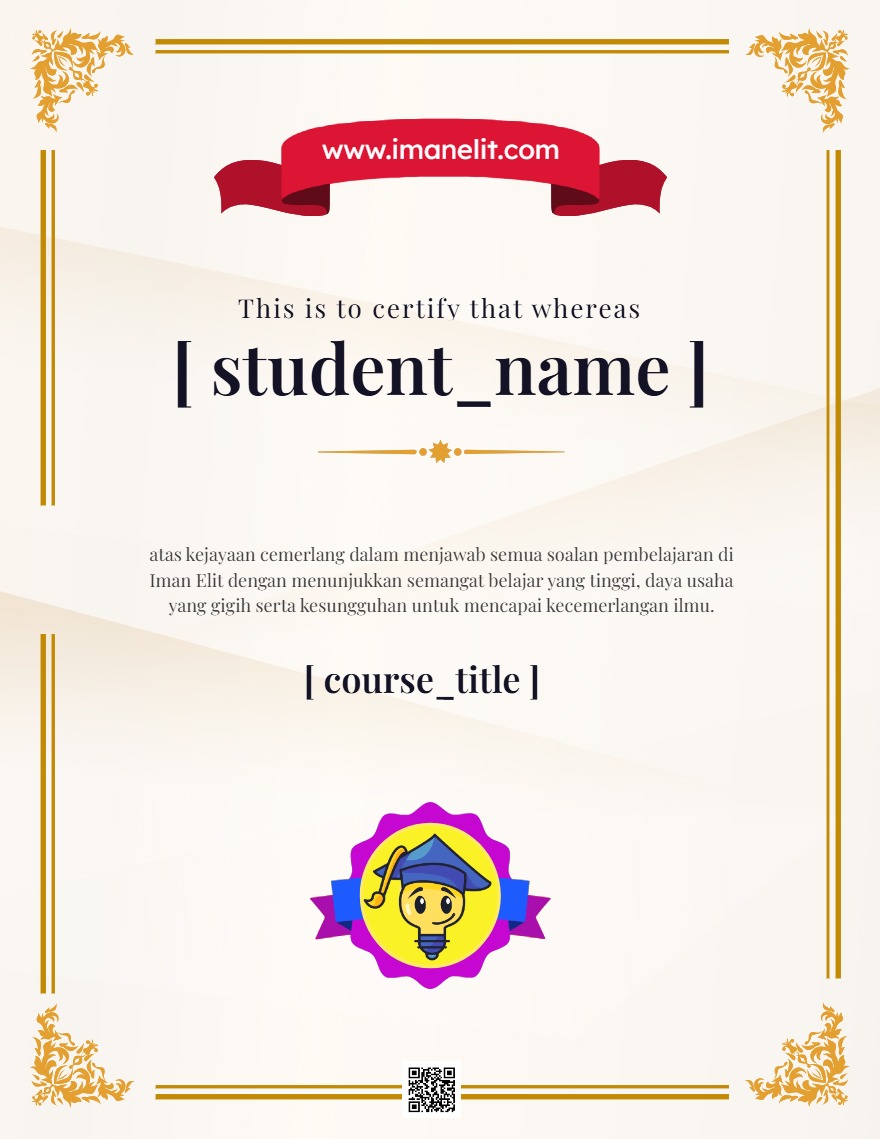
selected template

Student Ratings & Reviews

No Review Yet
No Review Yet

Want to receive push notifications for all major on-site activities?