
English Year 1

Categories: Bahasa Inggeris, Tahun 1
Wishlist Share

About Course

English for Year 1 focuses on basic language skills that help children communicate, understand, and express themselves in English. The subject introduces students to simple vocabulary, short sentences, and basic grammar in a fun and engaging way.

Students will learn to:

  • Recognise and use everyday words (numbers, colours, animals, classroom objects, family).

  • Understand and respond to simple questions and instructions.

  • Read short sentences and match words with pictures.

  • Write basic words and sentences correctly.

  • Sing songs and recite rhymes to improve listening and pronunciation skills.

The lessons combine listening, speaking, reading, and writing activities to build confidence and create a strong foundation in English.

Show More

Course Content

Unit 1: I Can Hear…
Brief Notes: Main theme: Sounds around us. Basic sentences: I can hear a cat. I can hear a bird. Vocabulary (Animals & sounds): cat → meow dog → woof bird → tweet cow → moo duck → quack Skills: Listening & identifying sounds. Construct simple sentences with the phrase I can hear…

  • Objective Question

Unit 2 – What Do You Say?
Brief Note: Brief Notes Greetings Hello Good morning Good afternoon Good night Polite words Please Thank you Sorry Excuse me Responses / Short answers You're welcome It's okay That's all right

Unit 3 A: Nice to Meet You
Short Notes Greetings – How to say hello to others. Hello! Hi! Good morning! Introducing yourself – Saying your name. My name is Ali. I am Siti. Asking names – Learning others’ names. What is your name? I am Amir. Politeness – Using polite words. Nice to meet you. Thank you. Friendship – Making new friends through greetings and introduction.

Unit 3B – Try Again 1
Key Notes Greetings: Hello, Hi, Good morning, Good afternoon, Good night. Simple Questions: What is your name? → My name is Ali. How are you? → I am fine, thank you. Polite Words: Please, Thank you, Sorry, Excuse me. Practice: Repeat simple dialogues with friends. Goal: Speak politely and with confidence.

Unit 4A – Use Your Time Well
Short Notes Time is precious – We should not waste it. Use time wisely – Spend time on useful activities such as studying, helping, or exercising. Daily routine – Plan your day: wake up early, go to school, do homework, play, rest. Bad habits – Spending too much time on TV, games, or being lazy wastes time. Good habits – Being punctual, finishing tasks on time, and helping others.

Unit 4B – Move Ahead 1
Short Notes Time Management – use time wisely for study, play, and rest. Daily Routines – wake up, go to school, do homework, play, sleep. Good Habits – do things on time, don’t be late, finish tasks. Polite Phrases – "Excuse me", "Please wait", "I’m ready". Values – discipline, responsibility, respect for time.

Unit 4C – Let’s Have Fun 1
Short Notes This unit is about fun activities we do in daily life. Pupils learn simple verbs (play, run, jump, sing, dance). It encourages pupils to use English in action-based learning like songs, games, and role-play. Focus: Listening and Speaking skills in a fun way.

Unit 5: My Happy Family
Short Notes Family members: father, mother, brother, sister, grandmother, grandfather. A happy family loves and cares for each other. We help our family at home. We spend time together with our family.

Unit 6A – Story Time 1
Short Notes Story Time introduces simple English stories for children. Stories help pupils learn new words and understand sentence structure. Pupils practise listening and reading through short texts. Moral values are included (e.g., being kind, helping friends, sharing). Pupils can answer simple questions based on the story to test comprehension.

Unit 6B – Try Again 2
Short Notes Try Again means do not give up if you make mistakes. Practice makes us better in speaking, reading, and writing English. It is okay to be wrong, but important to learn and correct mistakes. Always listen carefully, repeat, and try again until you succeed. Confidence grows when you keep trying.

Unit 6C – Move Ahead 2
Short Notes Daily Routines → Activities we do every day (wake up, eat, go to school). Good Habits → Brushing teeth, washing hands, being on time. At School → Listen to teacher, play with friends, share and help each other. At Home → Respect parents, do simple chores, keep the house clean. Polite Words → Always say thank you, sorry, please, excuse me.

Unit 7 – Our Colourful World
Short Notes Colours are everywhere – in nature, at home, at school. Basic colours: red, blue, yellow, green, orange, purple, pink, black, white, brown. Colours can describe objects (red apple, blue bag, green leaf). Colours can also show feelings (red = angry, blue = sad, yellow = happy). Learning colours helps us talk, read, and write about the world around us.

Unit 8A – Our Classroom
Short Notes A classroom is a place where pupils study. In the classroom, we can see tables, chairs, books, and a whiteboard. We must keep our classroom clean and tidy. Pupils must listen to the teacher and follow instructions. In the classroom, we learn, read, write, and play together.

Unit 8B – Let’s Have Fun 2
Short Notes Let’s have fun means enjoying activities together. We can have fun by playing games, singing songs, drawing, or dancing. Having fun with friends makes us happy and healthy. Fun activities help us learn new words and work together. We must play safely and share with others while having fun.

Unit 9A: I Can Count
Short Notes Counting Numbers – Learn numbers 1 to 10. Objects and Numbers – Match objects with the correct number. Question: “How many?” – Use “There is …” (singular) or “There are …” (plural). Sequence – Numbers must follow order (1, 2, 3, … 10). Daily Life – Counting fruits, toys, friends, books, etc.

Unit 9B – Play and Learn 1
Short Notes This unit is about numbers, counting, and simple addition. Focus on: counting objects, matching numbers, and solving basic problems. Key words: more, less, how many, count, add.

Unit 9C – Try Again 3
Short Notes This unit helps students practise numbers, colours, and classroom vocabulary. Focus on listening, matching, and choosing the correct answer.

Unit 10 – Happy Birthday
Short Notes: Birthday means the day you were born. We celebrate birthdays with family and friends. Common birthday words: cake, candles, gift, party, balloons, wish. When we celebrate, we sing “Happy Birthday”, eat cake, and give gifts. Polite ways to greet someone on their birthday: “Happy Birthday!” “Many happy returns!” “Best wishes on your birthday!”

Unit 11 – Are You Hungry?
Short Notes Focus: Food vocabulary, expressions of hunger, polite questions and answers. Key Phrases: Are you hungry? / Yes, I am. / No, I’m not. I want … / I like … / I don’t like … Common foods: rice, noodles, bread, eggs, fruits, vegetables, chicken, fish, milk.

Unit 12A – Story Time Again
Short Notes This unit helps students listen to a story, understand its content, and answer questions. Key vocabulary: characters (boy, girl, dog, cat), actions (run, jump, eat, play), places (home, school, park), feelings (happy, sad, angry, surprised). Students practice: Reading comprehension – answer questions about a story. Vocabulary recognition – identify words from pictures. Simple sentences – understand “who”, “what”, “where”, “when”. Tips: Look at pictures → guess what happens → read/answer carefully.

Unit 12B – Try Again 4
Short Notes Greetings – We say “Hello”, “Good morning”, “Good night”. Feelings – Happy 😊, Sad 😢, Angry 😡, Tired 😴. Things We Eat – Rice 🍚, Bread 🍞, Milk 🥛, Apple 🍎. Actions – Run 🏃, Jump 🤸, Read 📖, Write ✍️. Polite Words – Please 🙏, Thank you 🙌, Sorry 😔, Excuse me 🙂.

Unit 13A – I Look Good
We wear clothes every day. Clothes keep us safe and make us look good. Examples of clothes: shirt, dress, trousers, shoes, hat. Colours make our clothes look nice. We wear different clothes for school, play, and parties.

Unit 13B – Move Ahead 3
Short Notes Clothes keep us safe and comfortable. We wear different clothes for school, home, and special occasions. Colours and styles of clothes can be different. We must keep our clothes clean and neat.

Unit 13C – Let’s Have Fun 3
Short Notes This unit is about appearance, clothes, and simple daily expressions. Pupils learn to: Identify simple clothing items (shirt, dress, shoes, hat). Use adjectives for appearance (tall, short, big, small). Respond to simple questions like “What are you wearing?” Enjoy learning through games, songs, and fun activities.

Unit 14A – Getting Dressed
Short Notes We wear clothes every day. We put on clothes such as shirt, dress, trousers, skirt, shoes, socks, hat. Clothes keep us clean, safe and warm. We wear different clothes for school, sports, parties, and sleeping (pyjamas). Always keep your clothes neat and tidy.

Unit 14B – Try Again 5
Short Notes Clothes Vocabulary: shirt, dress, trousers, shoes, hat, socks, skirt, T-shirt, jacket. Sentences: “I wear a hat.” “She has a red dress.” “He puts on his shoes.” Question Words: What, Where, Who (e.g. What are you wearing?). Daily Routine: Getting dressed before going out.

Unit 15 – Where Are You Going?
Short Notes Asking about places: “Where are you going?” → “I am going to the … (school, park, shop, library, mosque, market, zoo).” Common places: school, park, shop, mosque, market, playground, zoo, library. Answer structure: ➝ “I am going to the …” Use polite response: “Thank you / Okay / Goodbye.”

Unit 16 – All About Money
Short Notes Money is used to buy things we need or want. We use coins and notes as money. Coins are round and small, while notes are flat and made of paper or plastic. We use money to pay in shops, markets, and restaurants. Saving money is important for the future.

Unit 17A – Keep the Place Clean
Short Notes We must keep our home, classroom, and school clean. Do not throw rubbish on the floor. Use a dustbin. Sweep, wipe, and wash to keep things tidy. Keeping clean makes us healthy and happy. Everyone must play a role to keep the environment clean.

Unit 17B – Move Ahead 4
We must keep our place clean. Always throw rubbish into the bin. Wash your hands after playing or eating. A clean classroom makes us happy and healthy. Work together to keep the environment tidy.

Unit 17C – Let’s Have Fun 4
Short Notes We learn about daily life and simple actions. Words include clean, tidy, rubbish, sweep, wash, throw, help. Practice sentences using verbs (action words). Example: I sweep the floor. / She throws the rubbish. Always keep your place clean and safe.

Unit 18A – We Love Malaysia
Short Notes Malaysia is our country. The national flag is called Jalur Gemilang. Malaysia has many states. The capital city is Kuala Lumpur. The Prime Minister leads the country. We celebrate Merdeka Day on 31st August. We must love and respect our country. We should keep Malaysia clean and safe.

Unit 18B – Try Again 6
Short Notes We love Malaysia. Malaysia has many races, cultures, and traditions. The flag of Malaysia is called Jalur Gemilang. The colours of the flag are red, white, blue, and yellow. Our national flower is hibiscus. We sing Negaraku as the national anthem. The king of Malaysia is called the Yang di-Pertuan Agong. Malaysia has many famous places like KLCC, Penang Bridge, Mount Kinabalu. We must keep Malaysia clean and love our country.

Unit 18C – Play and Learn 2
Short Notes We learn about shapes, colours, and simple objects around us. We practise counting, matching, and identifying things. Play and Learn section is about fun learning activities: choosing, matching, and recognising.

Unit 18D – Let’s Sing…
Short Notes Singing is a fun way to learn English. Songs help us remember words and sentences. We can sing about family, school, animals, colours, and daily life. Singing makes learning easy and enjoyable.

Earn a certificate

Add this certificate to your resume to demonstrate your skills & increase your chances of getting noticed.
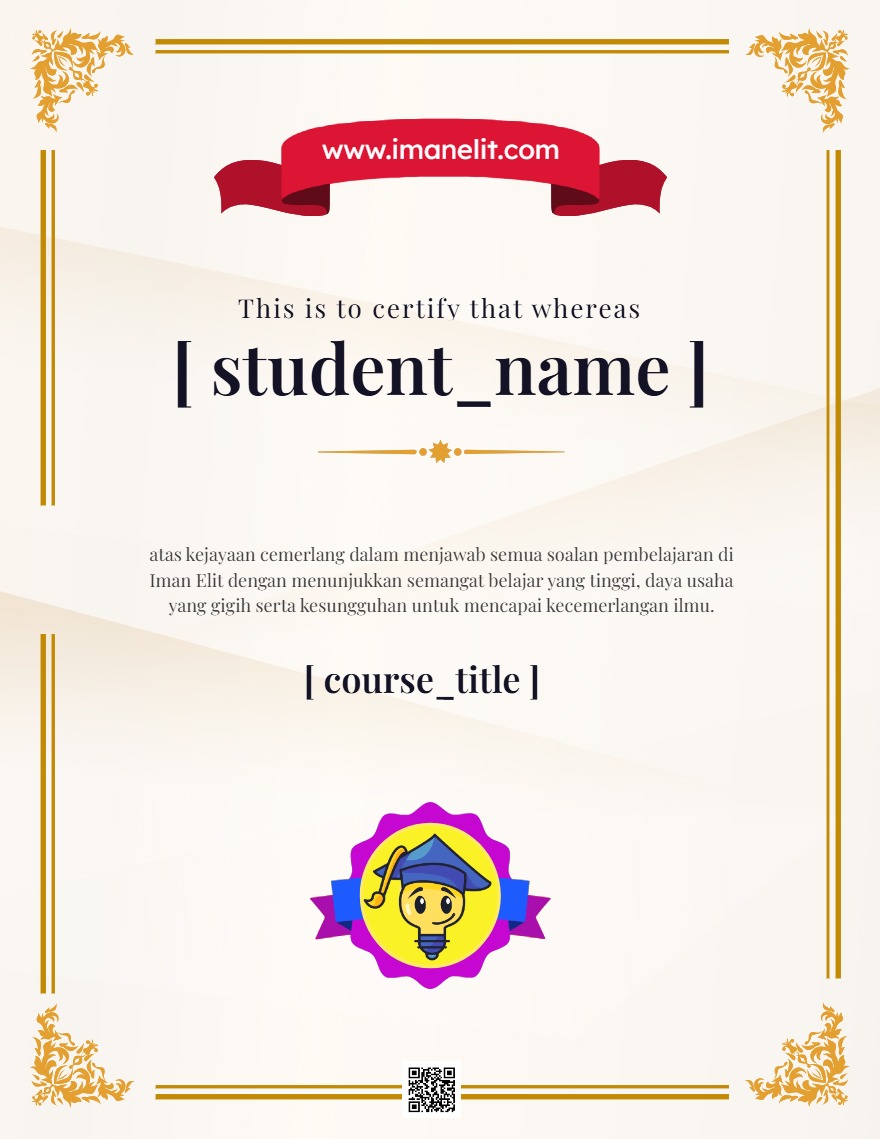
selected template

Student Ratings & Reviews

No Review Yet
No Review Yet

Want to receive push notifications for all major on-site activities?